
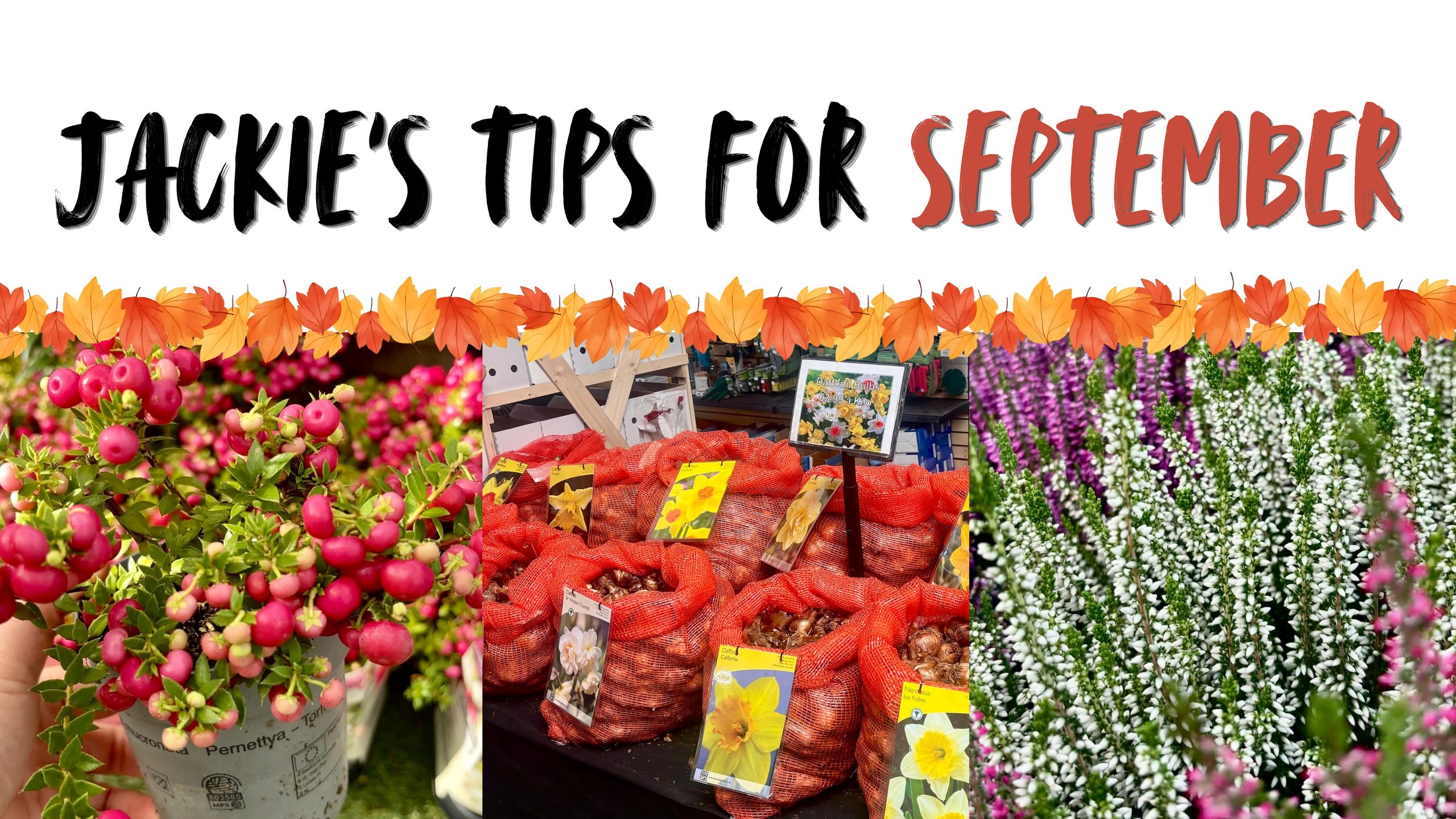
READ BELOW TO FIND TIPS ON CARING FOR YOUR PLANTS THROUGHOUT THE MONTH OF SEPTEMBER

- Plant spring bulbs: Buy and plant daffodils, crocuses, and hyacinths now for spring color
- Add shrubs and trees: Autumn is the best time to plant woody plants so they establish roots before winter
- Plant autumn containers: Refresh pots and hanging baskets with winter-flowering pansies, violas, cyclamen, and heathers for instant colour
- Sow hardy annuals: Plant seeds like calendula, cornflowers, and poppies directly into the soil now so they bloom earlier next summer
- Plant autumn onion sets: Put onion and garlic sets into the ground now to give them a head start for a mid-summer harvest next year
- Move perennials: Divide and replant crowded perennials like hostas and daylilies

- Mow regularly: Cut your grass on a higher blade setting as growth slows down
- Feed the lawn: Apply an autumn lawn fertilizer with less nitrogen and more potassium to strengthen roots for winter
- Repair patches: Sow grass seed on bare spots now while the ground is warm and damp
- Clear fallen leaves: Rake leaves off the grass weekly to prevent damp patches, moss, and lawn diseases from developing
- Scarify to remove thatch: Gently rake away the dead moss and thatch that built up over summer to let your lawn breathe
- Aerate compacted soil: Spike lawns with a garden fork or aerator to let air, water, and nutrients reach the root system

- Collect seeds: Save seeds from your favorite flowers in paper envelopes for next year
- Clean greenhouse glass: Wash greenhouse windows to let in maximum winter light
- Harvest crops: Pick your final tomatoes, apples, and beans before the first frost arrives
- Ripen green tomatoes: Trim away excess leaves around outdoor tomato plants to let the autumn sun reach the fruit, or pick green ones to ripen indoors on windowsill
- Lift and store root veggies: Dig up maincrop potatoes, carrots, and beetroots on a dry day, let them dry in the sun, and store them in breathable paper or hessian sacks
- Prune fruited canes: Cut summer-fruiting raspberry canes down to the ground once they finish producing, and tie in the new green canes for next year
FOR MORE TIPS AND USEFUL INFORMATION CLICK HERE TO BE REDIRECTED TO THE ‘PLANT FINDER’ – A GREAT TOOL FOR SPECIFIC PLANT HELP!


